One Ton - The Passing of a Legend
7/24/2026


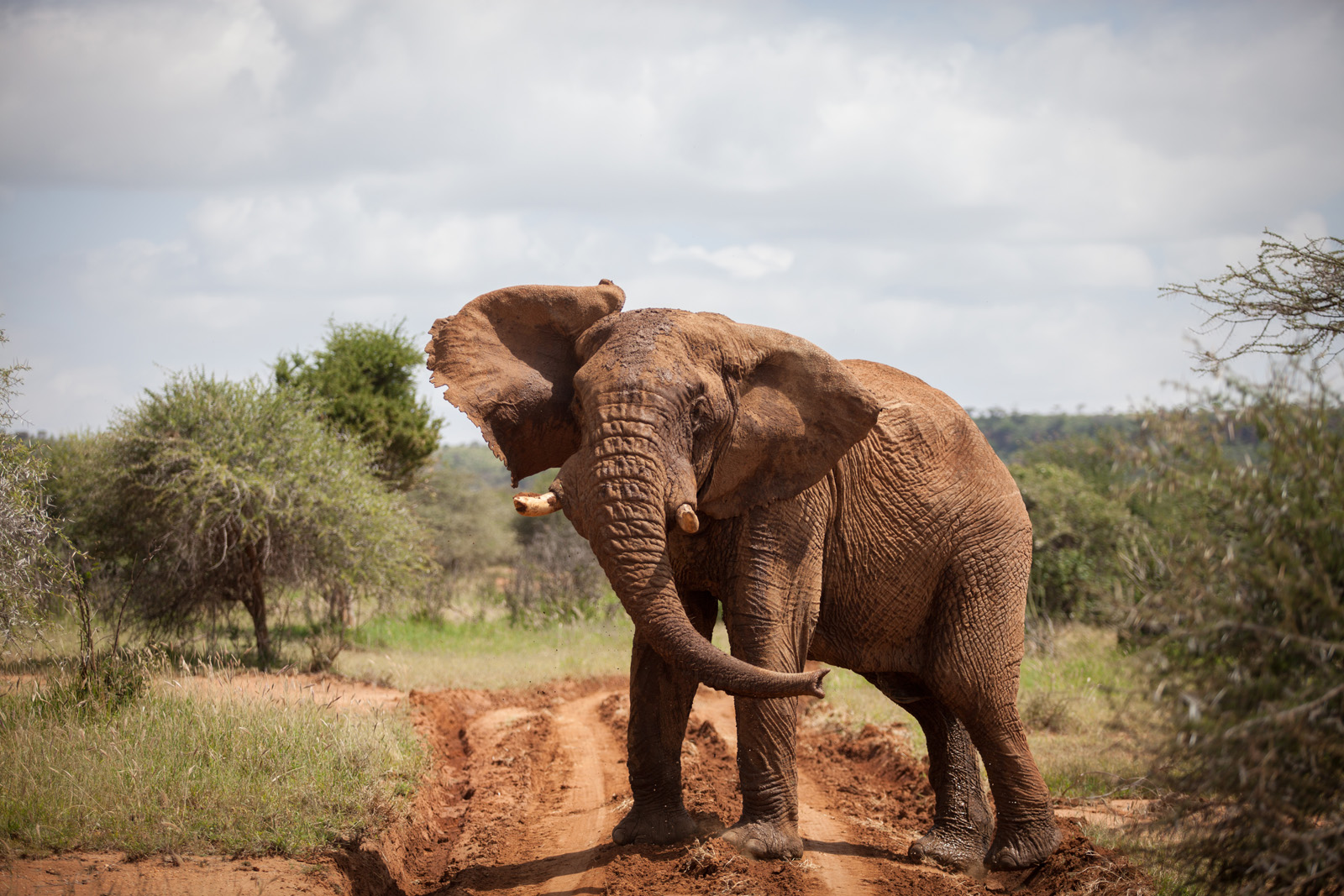
Over the weekend of July 5-6, the legendary tusker One Ton was found dead from natural causes, near Ol Donyo Lodge in Kenya’s greater Amboseli-Tsavo ecosystem. This follows the passing (in January) of Craig, another of the
area’s renowned super tuskers. While this is sad news, especially for fortunate safari travelers who had the privilege of seeing these magnificent bull elephants in this spectacular environment, the fact that both died of natural causes, and not at the hands of poachers, is testament to major successes in elephant conservation, especially in East Africa.
 Kenya’s elephant population has grown from 16,000 in 1989 to over 36,000 today, driven by anti‑poaching efforts, intelligence‑led enforcement, and the rise of community conservancies. Amboseli–Tsavo supports the largest remaining concentration of super tuskers on the continent, with roughly 20–25 individuals. Key conservancies such as Mbirikani, Kuku, and Olgulului — the community lands on which Ol Donyo Lodge and Tortilis Camp operate — have expanded safe habitat around Amboseli and the Chyulu Hills.
These conservancies create habitat and buffer zones where elephants can move between parks without entering farmland, supported by tourism leases, conservation payments, and ranger employment that align community incentives with wildlife protection.
 The same model is reshaping the greater Maasai Mara. Conservancies including Mara North (home of Little Elephant Pepper and Mara Toto), Olare Motorogi (Mara Plains), and Naboisho (Mara Nyika) secure the dispersal zones around the national reserve, protecting habitat for elephants moving between the Loita Hills, the Mara River basin, and the Siria Escarpment. Tourism revenue flows directly to landowners, turning wildlife protection into a viable economic strategy and reducing pressure to convert land to agriculture or settlement.

In Laikipia, conservancies such as Lewa and Loisaba anchor a landscape of secure habitat where elephants move freely between rangelands and forested escarpments.These conservancies fund ranger teams, grazing plans, and community programs through non‑consumptive tourism, stabilizing land‑use decisions and reducing conflict. Laikipia’s elephant population has remained resilient despite regional pressures, largely because community land is economically aligned with wildlife.
The picture in Tanzania is very similar, with an elephant population that has rebounded from 43,000 in 2014 to 60,000 today, driven by many of the same factors.
In the western Serengeti, the Singita Grumeti Reserve — comprising the Ikorongo–Grumeti Game Reserves and community‑managed lands — has become one of East Africa’s most successful conservation landscapes. Intensive anti‑poaching operations, community programs, and habitat restoration have stabilized elephant numbers and reopened movement routes between the western corridor and the central Serengeti. The Grumeti Fund’s ranger force and community partnerships are widely cited as a model for long‑term wildlife recovery.

So, while we take a moment to mourn the passing of One Ton, whose 50+ years of life saw him survive the darkest days of Kenya’s elephant crisis, it’s also a moment to celebrate the fact that he lived out his full natural life. And, without complacency, to acknowledge how much brighter the future is for the next generation of super tuskers (and all elephants across East Africa) as the landscape around them becomes economically aligned with their survival.
7/23/2026
Featured Property - Little Elephant Pepper Camp
«
previous
 |
|  |
|  Share
Share