
       |
||||||||||||||||||
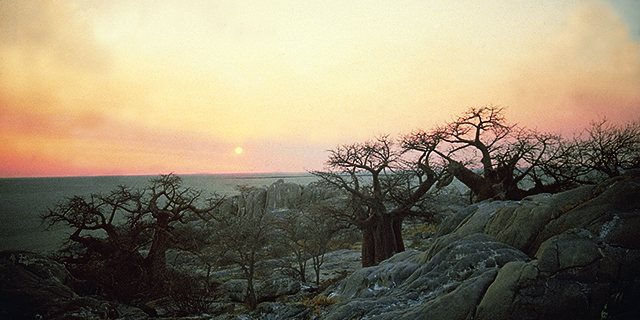
Kubu Island Safari

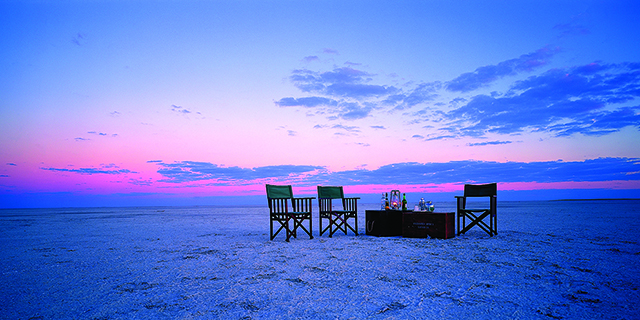
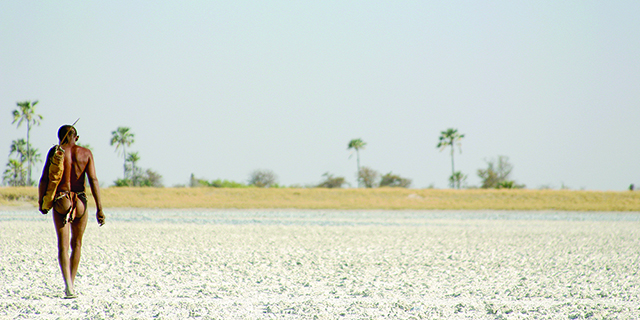
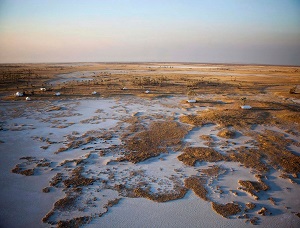
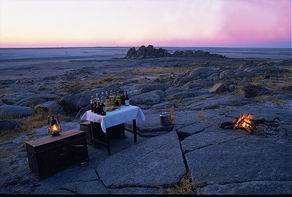
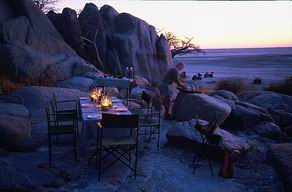
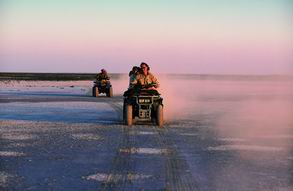
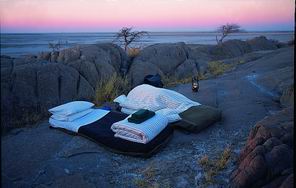
"Makgadikgadi? I asked what was out there, and they said 'Nothing - only idiots go there.' I thought fine, that's the place for me." - Jack Bousfield 1989 The Makgadikgadi. The largest expanse of 'nothingness' on earth, an area the size of Switzerland clearly visible from outer-space, devoid of anything but salt and shimmering horizon. A vast relic of Africa's largest body of water and a hitherto unknown cradle of earliest man's genesis. Infernal mirages warp reality into twisted parodies during the heat of the dry season and with the coming of the rains, life-giving water seeps into the pans, stimulating an annual pulse of life. The baking soda void is transformed into one of Africa's most fecund ecosystems. This five night safari is an in-depth exploration of the Kalahari Desert and mysterious Makgadikgadi Pans - the largest salt pans on earth. Guests enjoy three nights at San Camp, where they have the opportunity to discover the magic of the Kalahari and its fascinating eco-system. Two full days are spent traversing the Makgadikgadi's vast expanse of 'nothingness' on low impact quad bikes (ATV's), and guests spend two nights under the stars at the sacred and deeply spiritual Kubu Island. Safaris operate for a minimum of four guests on any dates from mid-May through September.
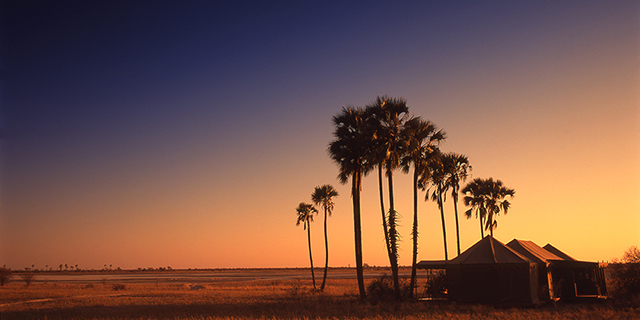
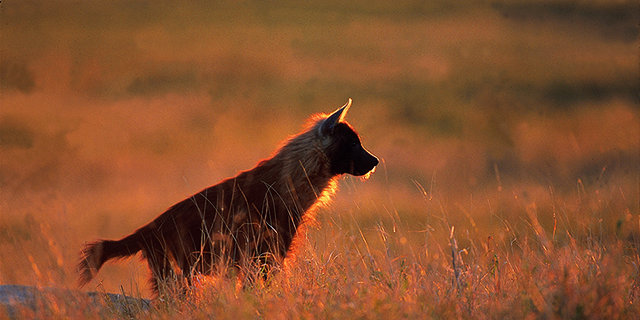
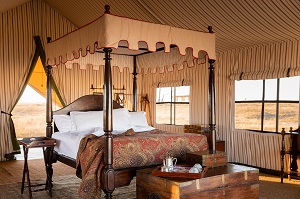
Days 1 to 3: San CampArrive at San Camp, in the heart of the Kalahari Desert. Guests spend two nights at San Camp in beautiful and romantic safari tents, experiencing the magic of the surrounding area. You will meet and interact with the area's famous meerkats (suricates), explore the diverse Kalahari ecosystem, and observe one of Africa's rarest carnivore species, the brown hyena. |
||||||||||||||||||

| Tour Code | # of Guests | Total # of Days and Nights |
Departs From and Ends At: |
Departure Days | US$ Rate Per Person Sharing | |
| KE | 4 | 6 Days / 5 Nights |
Jack's Camp Airstrip |
Any |
Jun 1 - Jun 30 | US$ 12,280 |
| Jul 1 - Aug 31 | US$ 13,280 | |||||
| Sep 1 - Sep 30 | US$ 12,280 | |||||
* The safari can operate for just 2 or 3 travelers at an additional cost (please contact us for details).
* Families traveling with children younger than 12 require a private guide (at additional cost).
INCLUDED
All accommodation on a per person sharing permanent tented camp and camping basis; all drinks excluding premium wines and champagnes and premium spirits and liqueurs; activities at San Camp and on the Kubu Island excursion; use of quad bikes; services of guide and staff; park fees; the Botswana Tourism Levy.
NOT INCLUDED
All scheduled flights and their departure taxes; charter flights to/from Jack's Camp Airstrip; all items of a personal nature; travel insurance; visas (if necessary); any new Botswana taxes; gratuities to guide and camp staff, and any activities and excursions which are not specified.
 |
|  |
|  Share
Share
| © 2010-2026 Classic Africa. All Rights Reserved. | Privacy Policy | Terms of Use Safari Photo Credits: Uncharted Africa Safaris (Sunset at Kubu Island) Luxury Safaris in Southern Africa Kubu Island Safari - Luxury African Safari Vacations | Mobile Site |
 |